Two Minutes Away, Or Actually On Its Way? A Local Taxi Versus an App in Ware and Hertford

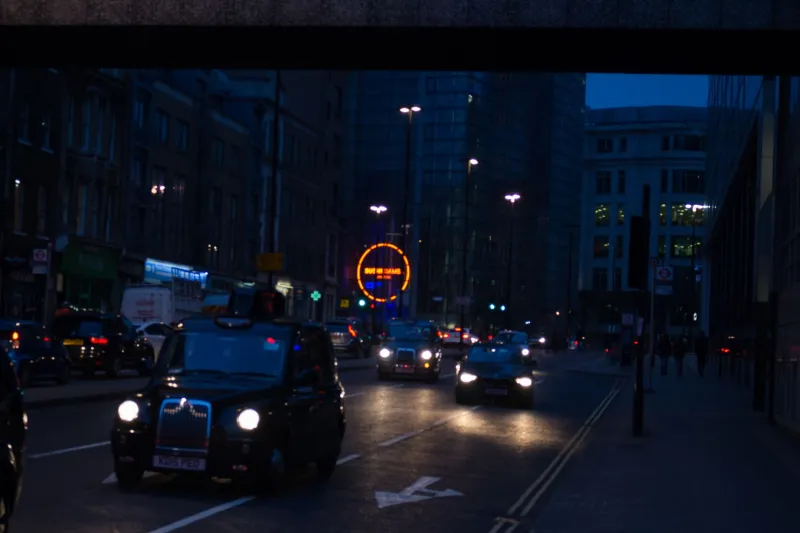
Photo by Photo by Lawrence Chismorie on Unsplash on Unsplash
There is a familiar moment on a night out in Hertford. You open a ride-hailing app, see a little car icon two minutes away, and feel a small burst of relief. Then the car disappears. Then a new estimate appears. Then the driver cancels. Meanwhile, the local taxi firm you could have phoned twenty minutes ago has already sent a confirmation text.
This is not an argument that apps are useless. They are genuinely handy in big cities where cars are plentiful and streets are easy to explain. But around Ware, Hertford and the villages in between, the comparison is more interesting than the adverts suggest. In 2026, the honest answer is that each option has its place, and the trick is knowing which one suits the trip you are actually making.
The promise versus the pin
Ride-hailing apps sell a simple promise: press a button, get a car. In practice, that promise depends on supply. On a wet Friday in December, or when a train has just emptied at Hertford East, supply gets thin. The app may show cars nearby, but nearby is not the same as available. Drivers can decline, cancel or be heading home. The estimate is just an estimate.
A local taxi firm works on a different model. You book a time, a pickup point and a destination. The firm assigns a driver. If something changes, you can ring and speak to a person who knows the area and knows the driver. That is not a small thing when you are standing outside a pub in Ware with a group of six and no one can agree which corner is the right one.
Where the apps feel the strain
Apps are at their weakest when the geography gets awkward. A village lane in Great Amwell or a house down a residential street in Watton-at-Stone can be hard for an app driver to find, especially if the pin is slightly off. Local drivers do not just know the postcode; they know which turning is easy to miss and which road looks like a shortcut but is not.
They also know the rhythms of the area. They know when Hertford town centre is likely to be gridlocked, when a station pickup needs a different approach, and when a back road will save ten minutes. That kind of knowledge is hard to replicate in an app that is optimised for a city grid.
Local knowledge is not a gimmick
There is a temptation to treat local knowledge as a nice extra. It is more than that. If you are heading to Stansted for an early flight, the difference between a driver who knows the airport drop-off routine and one who is following a blue line can be the difference between calm and a brisk jog to security.
If you are going to a wedding at a venue outside Hertford, a local driver will often know where the actual entrance is, not just the postcode. If you are coming back from a late train, they will know which side of the station is easiest to reach at that hour. These are small details, but they add up to a less stressful journey.
Airport and station runs: the details matter
Airport runs are where pre-booking earns its keep. A 4am pickup for Luton or Stansted is not the moment to discover that no app cars are active in your area. A local firm can confirm the booking in advance, agree a pickup time and give you a price before you go to bed. That is booking confidence, and it matters more than a flashy app interface.
Station runs are similar. The early train from Hertford East to Liverpool Street, or a return journey into Ware after a long day in London, is much easier when a car is already arranged. You are not relying on a driver being free at exactly the moment your train pulls in. You are not standing on the forecourt watching a cancellation message appear.
Accessibility and booking confidence
Accessibility is another area where the human conversation helps. If you need a wheelchair-accessible vehicle, a driver who can offer physical assistance, or a child seat for a family trip, an app can be a blunt instrument. A local firm can ask the right questions and match you with the right vehicle. That is not about being old-fashioned. It is about getting the journey right.
Booking confidence also matters for visitors. If you are staying in Ware for a wedding or visiting family in Hertford, you may not know the local area well. Being able to ring a firm, explain where you are and get clear instructions is worth a lot. Apps are designed for people who already know the map. Local firms are used to people who do not.
When the app still makes sense
None of this means you should delete the apps. For a quick solo trip across central Hertford at 2pm on a Tuesday, an app may be perfectly fine. If you are in a city with dense coverage, it can be the easiest option. The point is not loyalty. The point is fit.
For late nights, village pickups, airport runs, station transfers, group bookings and anything involving accessibility needs, a local taxi firm is usually the more reliable choice. For a simple, short, low-stakes trip in a busy area, an app can do the job.
A simple rule of thumb
If the journey matters, book it properly. That means a local firm with a confirmed time, a clear pickup point and a price you have agreed. If the journey is flexible and you are in a busy area with plenty of cars, an app is fine.
The real test is not which app looks slickest on your phone. It is which option gets you home without a cancellation message, a circling driver or a debate about which end of the station you are standing at. Around Ware and Hertford, that often points to the local firm.