Plan B at the Platform: Taxi Tactics for Ware and Hertford Rail Disruption
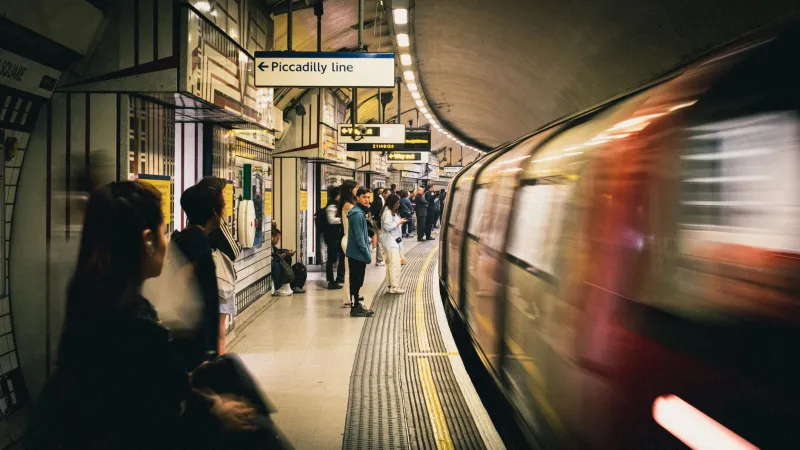
There is a particular moment at Ware or Hertford East when the departure board stops behaving like a timetable and starts behaving like a rumour. A planned engineering notice has been up for weeks, or a cancellation appears with almost no warning, and everyone on the platform is suddenly doing the same mental arithmetic: bus, wait, taxi, or give up and go home?
Rail replacement services are part of normal travel around here. They are not a scandal, and they are not always a disaster. But they are a different kind of journey from a train, and the people who cope best are the ones who decide early which tool fits the day.
First, Work Out Which Kind of Disruption You Have Got
Planned engineering works and late-notice cancellations look similar on a phone screen, but they behave very differently in real life. Planned works usually come with a replacement bus timetable, staff on the ground, and a route that has been thought through. Late-notice disruption is looser. A train is cancelled, a bus may be arranged, and the information can change while you are putting your coat on.
It also matters which line you are on. Ware and Hertford East sit on the Hertford East branch, with Greater Anglia running the service. Hertford North is a different station on a different line, handled by Great Northern. If you are mixing the two up in a hurry, you can waste twenty minutes before you have even left the house. Check the operator, check the station, and check whether the replacement service is calling at the station you are actually standing outside.
When the Replacement Bus Is Genuinely Fine
A replacement bus is often the sensible choice. If it is a straightforward daytime trip, the bus is running frequently, you have light luggage, and nobody is waiting on you at the other end, there is little point in overcomplicating things. A mid-morning run with a staff member pointing you towards a coach is not the disaster some travel chat makes it out to be.
The bus also works when you have given yourself a proper buffer. Not a hopeful five minutes, but a real thirty or forty minutes to absorb a slow load, a diverted route, or a driver who is doing the run for the first time. If your connection is tight, the bus becomes a gamble. If your connection is generous, it is just a slower way of getting there.
When a Booked Taxi Is the Calmer Choice
The calculation changes when the journey has a hard edge. An early flight, a hospital appointment, a school pick-up, a late-night return, or a connection that cannot slip are all moments when a replacement bus stops being a shared inconvenience and starts being a risk. Add in heavy bags, a child, a mobility issue, or a foul night of weather, and the taxi usually wins on peace of mind alone.
A booked cab also helps when the replacement bus is doing a tour of village stops before it joins the main road. That is not a criticism of the bus. It is just what buses do. A taxi goes door to door, on a route that makes sense for one journey rather than twenty.
The catch is that everyone else has the same idea at the same time. On a disruption day, local taxi availability tightens quickly. If you already suspect you will need a cab, book it before the platform announcement turns into a group chat. A local operator can tell you what is actually possible, which is more useful than watching an app estimate wobble upwards.
Station Pickups Without the Scrum
A rail replacement day is not the moment to give a driver the instruction 'outside the station' and hope for the best. Ware station sits on Station Road, and the approach can get pinched when a replacement coach is loading. Hertford East has the Mill Road side to think about. Hertford North has its own busy patch on North Road. These are not huge stations, but small spaces fill quickly when a coach, a few cars, and a crowd of confused passengers all arrive at once.
Agree a precise meeting point. It might be the taxi bay, a nearby side street, or the entrance to a car park rather than the station door itself. Give your driver the train or replacement bus you are on, not just the time you hoped to arrive. Keep your phone on, and if the bus is running late, send a quick message rather than letting the driver circle the block.
If you are being dropped off, ask for the entrance rather than the general station area. On a wet morning, that small difference matters.
Do Not Forget the Return Leg
People plan the outward journey beautifully and then treat the return as a problem for later. Later is exactly when the last replacement bus has gone, the platform is cold, and the taxi queue is longer than the bus queue was. Check the last services in both directions before you leave. If the return is the fragile part, book it or at least keep the number of a local firm to hand.
A Short Disruption Checklist
- Check the operator and station before you leave: Greater Anglia for Ware and Hertford East, Great Northern for Hertford North.
- Screenshot the replacement timetable, but do not treat it as scripture.
- Build in a real buffer if you are relying on a bus.
- Book a taxi early if the journey has a fixed deadline, heavy luggage, or a late-night return.
- Agree a precise pickup point, not just the station name.
- Keep your driver informed if the bus or train is running late.
The Bottom Line
Replacement buses are a useful shared service, and taxis are a useful private one. The trick is not to pick a side forever. Pick the right one for the journey in front of you. If the bus is direct, frequent, and you have time, take it. If the day is tight, dark, or carrying more weight than you want to manage, a booked cab from Ware or Hertford is the quieter option. Either way, decide before the platform announcement does it for you.